
The method
First, empty the list.
Write down every task competing for attention. Do not sort it yet. The first job is to stop using memory as a task manager.
A long list is information. It is not yet a plan.
Then turn activity into outcomes.
Read the list once. Circle the items that create a visible result, prevent a real problem, or unlock other work. Those are outcome candidates.
- Empty the list
Capture every open loop without judging it.
- Circle the outcomes
Find the tasks that create a meaningful change by the end of the day.
- Choose three
Pick one must-finish outcome and two valuable supporting outcomes.
- Park the rest
Move every uncircled task to a later list so it stops renegotiating for attention.
- Protect the first move
Write the smallest physical action that starts priority one.
The tie-breaker
If two tasks feel equally important, choose the one that prevents a consequence or makes another task easier.
What counts as a priority?
A priority is an outcome you can recognize when it is done. “Work on budget” is vague. “Reconcile July expenses” is clear. Strong priorities use a verb and a finish line.
Give the rest somewhere safe to wait.
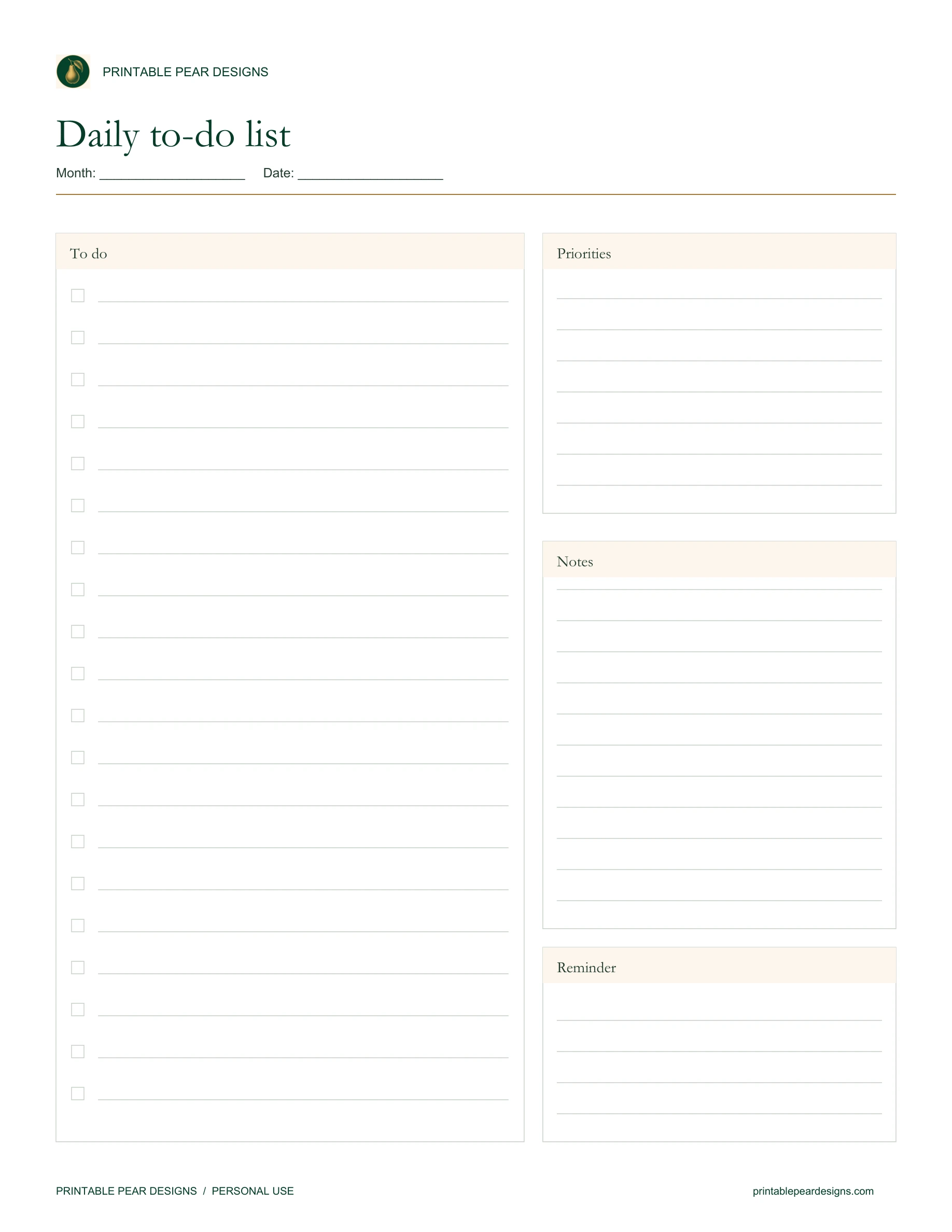
The point is not to pretend the other tasks disappeared. Keep them visible in the to-do area, but do not let them compete with the three outcomes that lead the day.